

From a blood draw to a change you can read.
Protearc is the interpretation and delivery layer. A partner laboratory runs the samples and issues every result.
- 1
Order
A licensed clinician orders the Brain or Inflammation panel, through your platform or Arc Watch, the portal for care teams.
- 2
Run
One blood sample is run on a plate at Neurocode, a CLIA-certified (#50D2301382), CAP-accredited (#9838151) laboratory in Bellingham, Washington, with bridging checks across plates.
- 3
Release
The laboratory director releases the result. Nothing appears for the care team before then.
- 4
Read
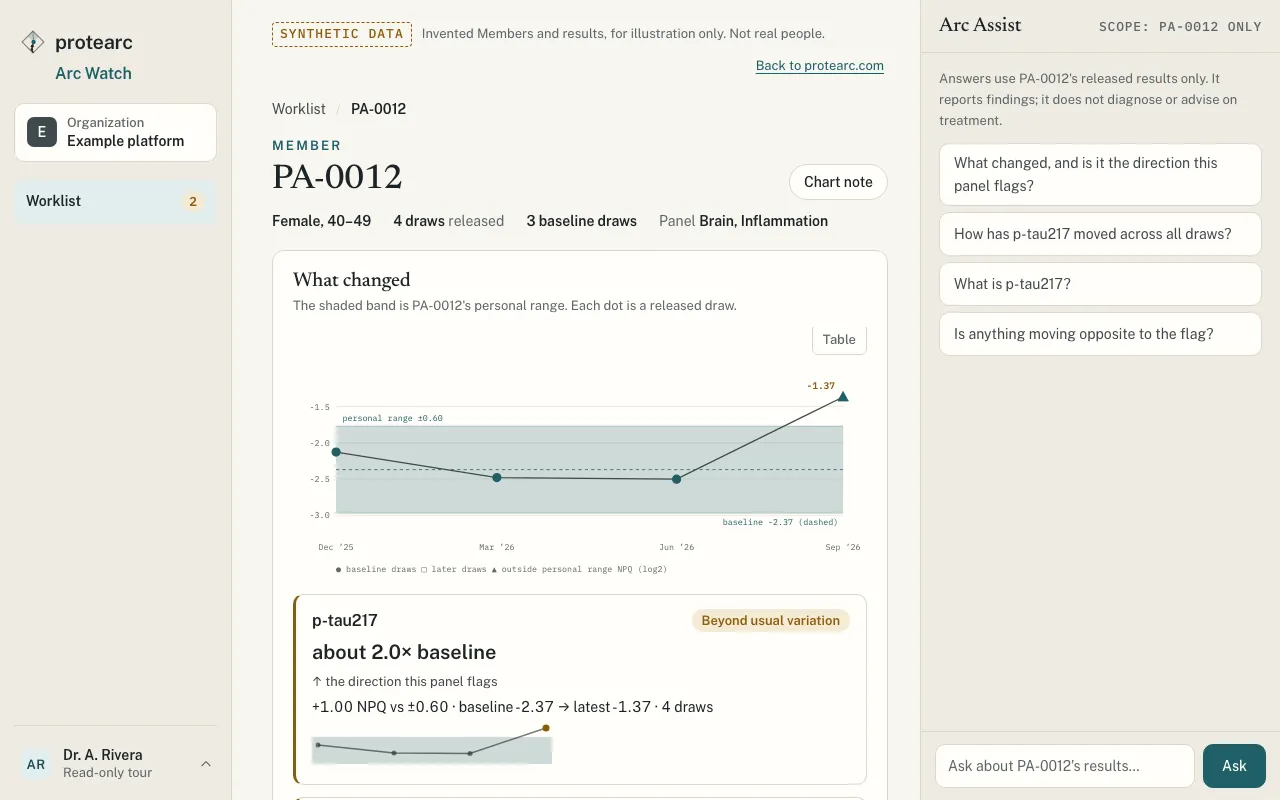
The first three released draws set the baseline. Later draws are compared with it, and a flagged change comes with the quality checks behind it.
One member, draw after draw
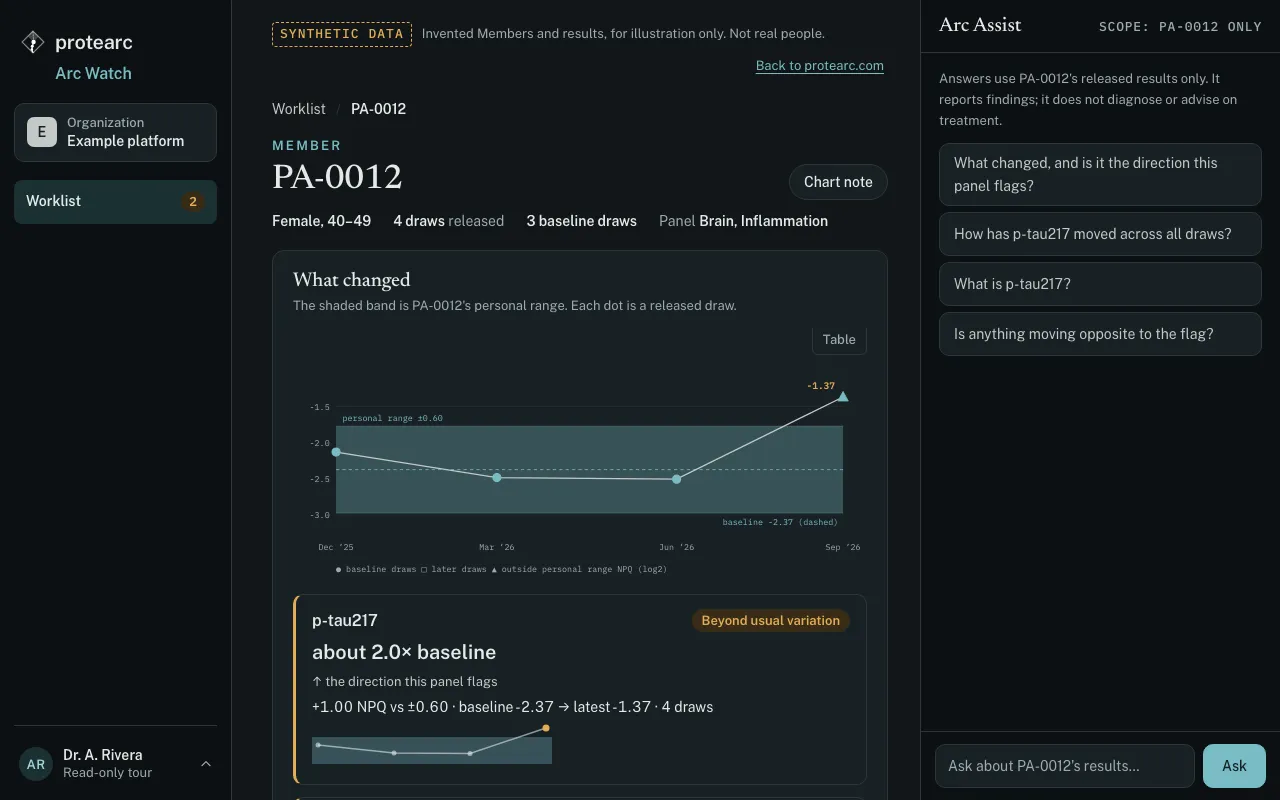
Each Protein Group is charted against the member's own range, so a change is easy to see.
A change is a finding, not a diagnosis
A change is flagged when a Protein Group moves further than the normal variation of that person's own results. It tells the clinician where to look. It does not say what condition a person has, and the diagnosis stays with the clinician. The panels are laboratory-developed tests, not cleared or approved by the FDA.
Talk to our team
Tell us what you run today and what you would like your care team to see. Example results on this site use synthetic data.